
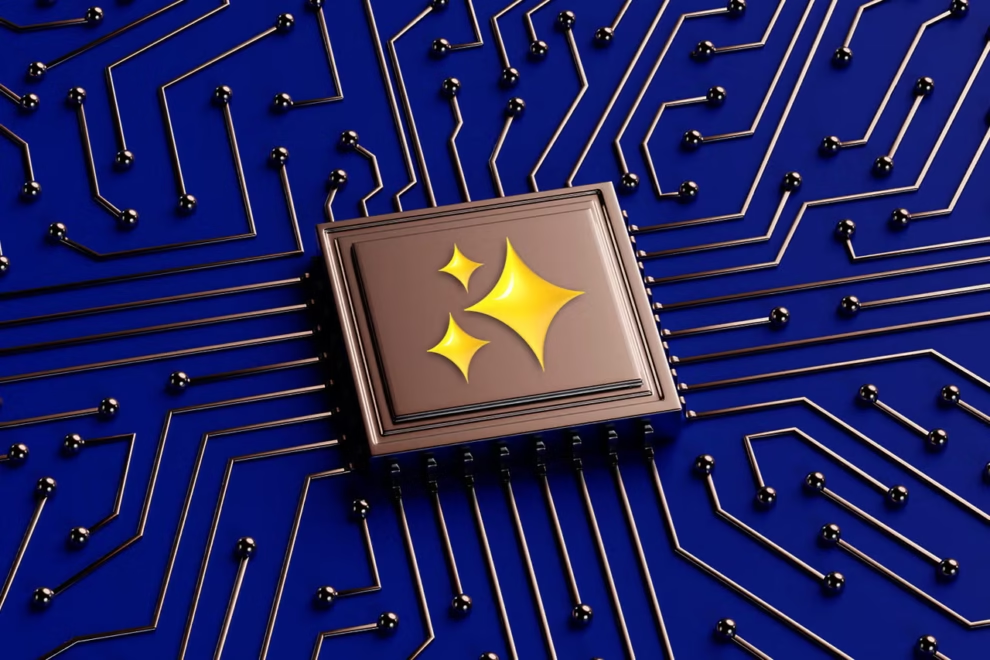
Major technology companies including Google, Microsoft, and OpenAI have quietly settled on almost the same four point sparkle or star icon to represent their Artificial Intelligence tools. At first glance, it feels harmless, maybe even logical. Sparkles suggest something smart, automatic, a little magical. But over time, this shared visual language has turned into a real problem for users who are now left guessing what each button actually does.
Key Takeaways
- Google (Gemini), Microsoft (Copilot), and Adobe all use variations of the sparkle icon.
- The icon stems from the magic metaphor which fails to explain how AI works.
- Users find it difficult to tell the difference between a clean up tool and a content generator.
- Designers warn that overusing one symbol reduces brand identity and trust.
From a usability standpoint, this repetition is risky. Icons are meant to act as shortcuts for understanding. When every button looks like a star, the star stops communicating anything useful. UX designers point out that users rely on pattern recognition to move quickly through software. If the same sparkle appears in an email app, a photo editor, and a spreadsheet, there is no reliable way to predict the outcome. In one place it might fix a typo. In another, it might rewrite or remove content entirely. That gap between expectation and result is where frustration builds.
There is also a trust issue underneath all of this. When AI tools share the same look, users may not realize when they are crossing from a familiar environment into an experimental or third party system. This matters even more in markets like India, where millions of newer internet users depend heavily on clear visual cues rather than detailed settings or explanations. Without distinct branding, the difference between a stable assistant and an unpredictable bot becomes harder to see, and that uncertainty can make people hesitant to engage at all.
Looking back, design history suggests this phase will not last forever. Early internet software leaned heavily on generic symbols like globes or lowercase e icons. Over time, those gave way to more distinctive visuals such as the Firefox fox or the Chrome circle. Those shifts happened once companies better understood how people actually used the technology. The current dependence on sparkles suggests that AI is still being framed as a kind of magic trick rather than a practical tool.
Some designers are already pushing for a change. Instead of a single generic star, they argue AI features should use functional icons that reflect what the tool does. A writing assistant could be represented by a pen. A photo editing AI might use a lens or crop symbol. These choices would make actions feel more deliberate and more predictable. Until that shift happens, AI will likely remain hidden behind a familiar glow of sparkles, attractive at first glance but often unclear once you tap it.
Frequently Asked Questions
Q. Why do all AI apps use the sparkle icon?
A. Companies use the sparkle icon because it suggests “magic” and ease of use. It tells the user that the software will do the hard work for them automatically.
Q. Which companies use this star icon for AI?
A. Most major tech firms use it, including Google for Gemini, Microsoft for Copilot, OpenAI for ChatGPT Plus features, and Adobe for Photoshop AI tools.
Q. What is the problem with using the same icon everywhere?
A. It leads to user confusion. When different features use the same symbol, users cannot guess what a button will do. It also makes it harder for brands to look unique.
Q. Will the AI icon change in the future?
A. Many design experts believe icons will become more specific. As AI becomes a standard part of all software, companies will likely use symbols that describe the specific task, such as writing, drawing, or coding.







Add Comment